

 libinraja2210@gmail.com
 Understanding Bonds: How They Work and When to Buy Them
Investing in bonds is usually thought-about a cornerstone of a diversified monetary technique. Despite their fame for being safer than shares, bonds carry their very own complexities and nuances that each investor ought to perceive. This article offers a complete exploration of bonds, how they work, the categories obtainable, and methods for figuring out when to purchase them.
What Are Bonds?
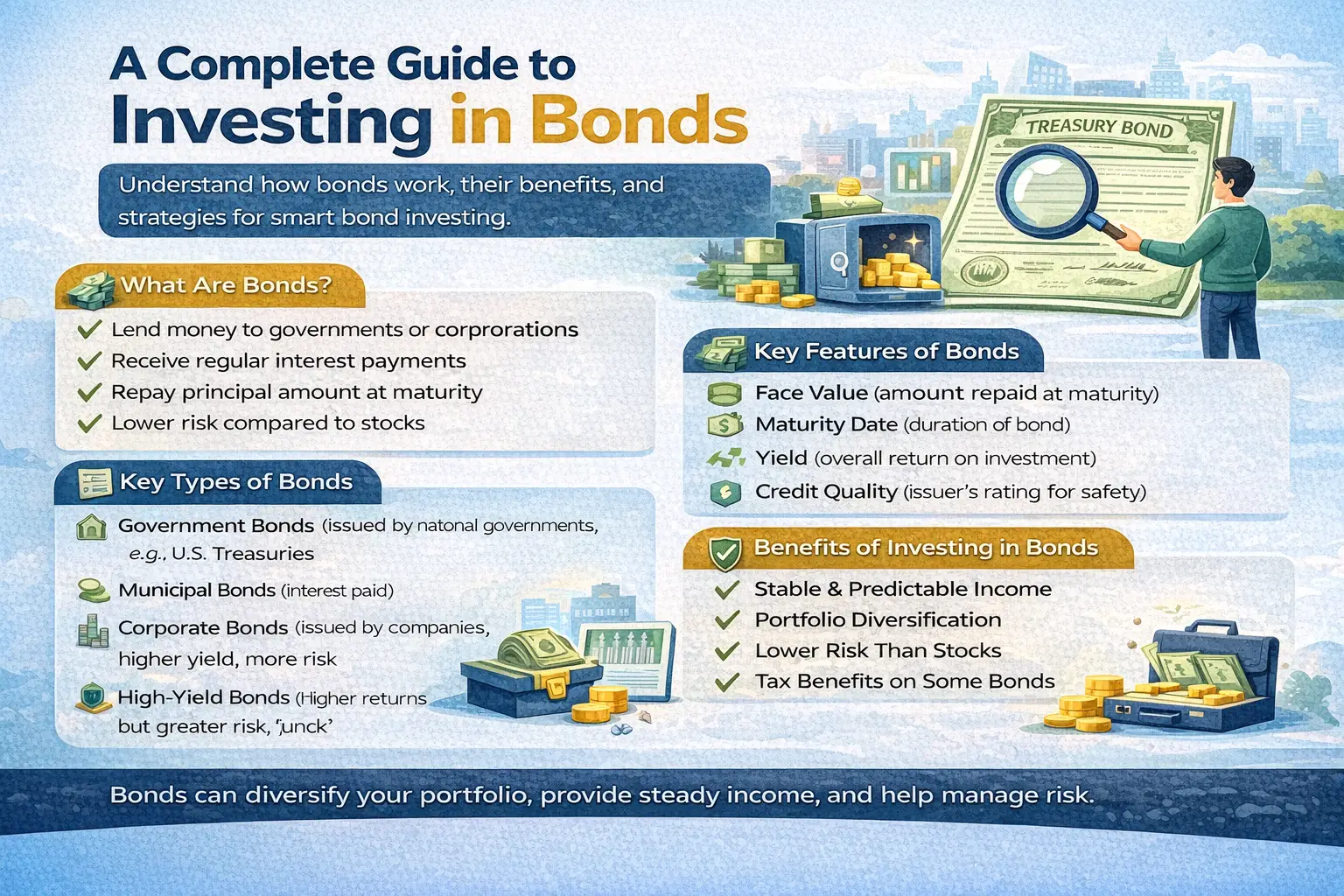
At their core, bonds are debt devices issued by entities corresponding to governments, municipalities, or companies to elevate capital. When an investor buys a bond, they’re basically lending cash to the issuer in alternate for periodic curiosity funds, referred to as coupon funds, and the eventual return of the principal at maturity.
Unlike shares, which signify possession in an organization, bonds are a type of debt. This distinction is essential as a result of it determines the chance and return profile of the funding. Bondholders are usually greater within the hierarchy of collectors than stockholders, which means that within the occasion of chapter, bondholders have a stronger declare on the issuer’s property.
Key Features of Bonds
Understanding the core options of bonds is crucial for making knowledgeable funding selections. The fundamental traits embrace:
1. Face Value (Par Value)
The face worth, additionally referred to as par worth, is the quantity the bondholder will obtain when the bond matures. Typically, bonds have a face worth of $1,000, however this will differ relying on the issuer.
2. Coupon Rate
The coupon price is the rate of interest the issuer agrees to pay the bondholder yearly or semi-annually. For occasion, a bond with a face worth of $1,000 and a coupon price of 5% can pay $50 per 12 months till maturity.
3. Maturity Date
The maturity date is the date when the bond’s principal is repaid to the investor. Bonds can have short-term maturities (beneath 3 years), medium-term maturities (3–10 years), or long-term maturities (over 10 years). The maturity size impacts the bond’s sensitivity to rate of interest adjustments.
4. Yield
Yield represents the bond’s efficient return on funding. It considers each the coupon funds and any distinction between the acquisition value and face worth. Yield calculations are essential for evaluating bonds of various sorts or maturities.
5. Credit Quality
The credit score high quality of a bond displays the issuer’s means to meet its monetary obligations. Rating businesses like Moody’s, Standard & Poor’s, and Fitch assign scores starting from AAA (highest high quality) to D (default). Higher-rated bonds have a tendency to provide decrease yields, whereas lower-rated bonds present greater yields to compensate for elevated danger.
Types of Bonds
Bonds are available in varied types, every with distinctive options and danger ranges. Understanding these variations helps buyers align their bond portfolio with their monetary targets.
1. Government Bonds
Government bonds, typically referred to as sovereign bonds, are issued by nationwide governments to finance public spending. Examples embrace U.S. Treasury bonds, U.Okay. Gilts, and German Bunds. These bonds are typically thought-about low-risk, particularly in nations with secure economies.
Treasury Bonds, Notes, and Bills
In the United States, Treasury securities are categorized by their maturity. Treasury payments (T-bills) are short-term devices maturing in lower than one 12 months. Treasury notes (T-notes) have maturities between 2 and 10 years, whereas Treasury bonds (T-bonds) are long-term, maturing in 20 or 30 years.
2. Municipal Bonds
Municipal bonds, or “munis,” are issued by cities, states, or native authorities entities. They typically present tax benefits, as curiosity earnings could also be exempt from federal and generally state and native taxes. Municipal bonds will be both normal obligation bonds, backed by the issuer’s taxing energy, or income bonds, secured by particular earnings sources corresponding to tolls or utility funds.
3. Corporate Bonds
Corporate bonds are issued by firms to fund operations, growth, or debt refinancing. These bonds typically provide greater yields than authorities bonds, reflecting the upper danger of default. Corporate bonds differ in high quality from investment-grade (low to average danger) to high-yield or “junk” bonds (greater danger, greater potential returns).
4. Zero-Coupon Bonds
Zero-coupon bonds don’t make periodic curiosity funds. Instead, they’re offered at a big low cost to their face worth, and the investor receives the total face worth at maturity. The distinction between the acquisition value and the face worth represents the investor’s return. These bonds are extremely delicate to rate of interest adjustments due to their lengthy length.
5. Convertible Bonds
Convertible bonds provide the bondholder the choice to convert the bond right into a predetermined variety of the issuing firm’s shares. This function combines the soundness of bonds with the potential for fairness upside, making them engaging to buyers looking for average danger and potential progress.
How Bonds Work
The mechanics of bond investing revolve round three fundamental rules: curiosity funds, market costs, and yield calculations.
Interest Payments
Bonds generate earnings primarily by way of coupon funds. The frequency of those funds can have an effect on an investor’s money stream technique. For instance, month-to-month or semi-annual funds could also be most popular for these looking for common earnings.
Bond Prices and Market Fluctuations
While the face worth stays mounted, bond costs within the secondary market fluctuate due to rate of interest actions, credit score high quality adjustments, and market demand. When rates of interest rise, present bonds with decrease coupon charges develop into much less engaging, inflicting their market costs to fall. Conversely, when rates of interest decline, present bonds with greater coupon charges enhance in worth.
Yield to Maturity (YTM)
Yield to maturity is the whole anticipated return of a bond if held till it matures, factoring in present value, coupon funds, and time remaining. YTM is a essential measure for evaluating bonds and assessing whether or not they’re priced pretty available in the market.
Risks Associated with Bonds
Although bonds are typically thought-about safer than shares, they carry a number of dangers that buyers should consider:
1. Interest Rate Risk
Interest price danger is the chance {that a} bond’s value will fall due to rising rates of interest. Long-term bonds are extra delicate to rate of interest adjustments, whereas short-term bonds expertise much less value volatility.
2. Credit Risk
Credit danger, or default danger, is the likelihood that the issuer might fail to make curiosity or principal funds. Investors can mitigate this danger by specializing in higher-rated bonds or diversifying their bond holdings throughout issuers.
3. Inflation Risk
Inflation erodes the buying energy of mounted curiosity funds. Bonds with mounted coupons are notably susceptible in high-inflation environments, as the true worth of the returns diminishes.
4. Liquidity Risk
Some bonds, particularly these issued by smaller companies or municipalities, could also be much less liquid, which means they can’t be simply offered at truthful market worth. Liquidity danger can impression an investor’s means to entry funds when wanted.
5. Call Risk
Certain bonds are callable, which means the issuer can redeem them earlier than maturity, usually when rates of interest fall. Call danger can restrict the potential returns for buyers who deliberate to maintain the bond till maturity.
When to Buy Bonds
Knowing when to purchase bonds requires understanding each market circumstances and private monetary targets. Here are key issues:
1. Economic Environment
Bonds have a tendency to carry out properly in periods of financial uncertainty or market volatility, as buyers search security and predictable earnings. Conversely, in a booming economic system with rising rates of interest, bond costs might decline, making timing essential.
2. Interest Rate Outlook
When rates of interest are anticipated to fall, shopping for bonds with greater coupon charges can lock in engaging yields. Conversely, in a rising price atmosphere, shorter-duration bonds could also be preferable to scale back rate of interest publicity.
3. Portfolio Diversification
Bonds can present stability and earnings in a diversified portfolio, balancing the upper volatility of equities. Investors approaching retirement typically enhance bond allocations to scale back total portfolio danger.
4. Income Needs
Bonds are perfect for buyers looking for predictable earnings streams. Retirees or people with mounted monetary obligations might prioritize bonds for his or her common curiosity funds.
5. Risk Tolerance
An investor’s danger urge for food is a significant component in deciding when to purchase bonds. Conservative buyers might deal with authorities or high-grade company bonds, whereas these prepared to take extra danger may think about high-yield or convertible bonds for probably greater returns.
Strategies for Bond Investing
1. Laddering
Bond laddering entails buying bonds with staggered maturities. This technique offers common earnings, reduces reinvestment danger, and permits buyers to benefit from altering rates of interest over time.
2. Barbell Strategy
The barbell technique combines short-term and long-term bonds whereas avoiding intermediate maturities. This method balances liquidity and rate of interest sensitivity, providing flexibility and earnings stability.
3. Total Return Approach
Some buyers deal with complete return, combining curiosity earnings with potential capital features from shopping for undervalued bonds. This method requires cautious market evaluation and monitoring.
4. Diversification Across Bond Types
Diversifying throughout authorities, municipal, and company bonds with various maturities and credit score qualities helps mitigate danger and optimize returns. A well-structured bond portfolio can climate financial cycles and scale back total volatility.
Conclusion
Bonds are a elementary element of many funding portfolios, providing predictable earnings, danger administration, and diversification advantages. Understanding how they work, the categories obtainable, and the components influencing their efficiency is crucial for profitable bond investing. By contemplating financial circumstances, rate of interest developments, and private monetary targets, buyers could make knowledgeable selections about when and which bonds to purchase. A disciplined method, mixed with strategic diversification and danger evaluation, permits bonds to function a dependable basis for long-term wealth constructing and monetary stability.
0 Comment